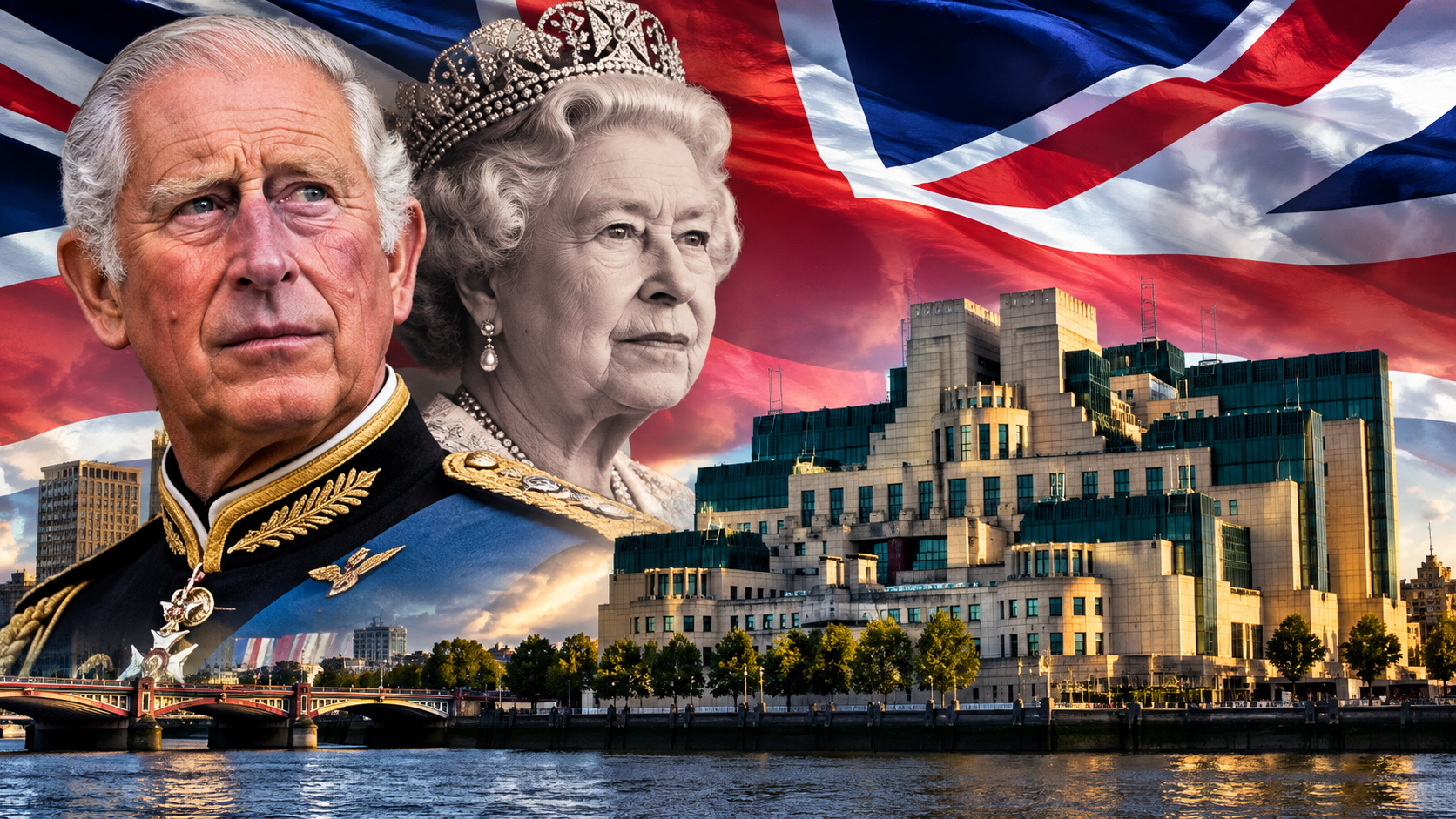

As MI5 warns of growing threats from Russia, Iran and violent extremism, Britain faces a difficult question: are our intelligence services, political institutions and communities prepared for an increasingly dangerous world?
Table of Contents
Britain is facing a new era of insecurity
Britain’s security landscape is changing, and the latest assessment from MI5 should concern anyone who believes national security begins and ends with military strength.
On 13 October 2026, MI5 Director General Sir Ken McCallum warned that the United Kingdom faces an increasingly complex combination of foreign interference, espionage, sabotage and terrorism. His assessment revealed that the security service’s state-threat caseload has quadrupled over the past decade, illustrating the growing pressure on Britain’s intelligence capabilities.
The warnings come at a time when international tensions are deepening, conflicts abroad are creating security consequences at home, and extremist movements are exploiting political grievances and social divisions.
Russia’s increasingly aggressive activities, Iran-linked threats against individuals and communities, and the continuing danger from Islamist and extreme right-wing terrorism present different challenges. Yet they share a common characteristic: each has the potential to undermine public safety, democratic confidence and the functioning of British society.
MI5 is not alone in sounding the alarm. In December 2025, MI6 chief Blaise Metreweli warned about Russia’s destabilising activities across Europe. Together, the assessments from Britain’s domestic and foreign intelligence services point towards a troubling conclusion: the distinction between external conflict and internal security is becoming increasingly difficult to maintain.
But warnings alone are not a national security strategy. The real test is whether the government can translate intelligence assessments into effective protection, meaningful accountability and long-term national resilience.
1. Russia’s shadow war against Britain
Russia’s invasion of Ukraine fundamentally altered Europe’s security environment, but Moscow’s confrontation with Western countries is not confined to the battlefield. Russian-linked hostile activities have included espionage, cyber operations, suspected sabotage and attempts to disrupt institutions that support European security.
For Britain, the danger lies partly in the ambiguity of these operations. Unlike conventional military attacks, covert interference can be difficult to identify and attribute. Damage to transport infrastructure, suspicious activity around defence facilities or attempts to interfere with essential services may initially appear to be ordinary criminal incidents.
Such tactics allow hostile states to create disruption while attempting to avoid the consequences associated with open military confrontation.
MI6’s warnings about Russia’s destabilising activities reinforce the concerns raised by MI5. The two agencies approach the problem from different directions, but their assessments point towards the same conclusion: Britain must prepare for hostile state activity that can affect domestic life without a formal declaration of war.
This raises uncomfortable questions about the country’s preparedness. How effectively are our energy networks protected? Are transport operators equipped to identify suspicious interference? Do private companies responsible for essential infrastructure understand their responsibilities when national security is at stake?
The British government has rightly supported Ukraine and worked alongside NATO allies to strengthen European security. However, international commitments must be accompanied by adequate protection at home.
Britain needs stronger cooperation with European intelligence agencies, improved security around critical infrastructure and more effective mechanisms for investigating suspected foreign-directed sabotage.
It must also resist the temptation to confuse national security with unnecessary escalation. A credible response to Russian aggression should combine deterrence, diplomacy, intelligence cooperation and carefully targeted economic measures.
Protecting Britain requires strategic discipline rather than political theatre.
2. Iran and the growing threat of foreign intimidation on British soil
Iran presents a different security challenge, one that raises serious questions about the ability of foreign governments to intimidate individuals living within Britain.
MI5 has repeatedly warned about alleged Iranian state-linked operations targeting dissidents, journalists and people associated with Jewish or Israeli interests. In his latest assessment, McCallum referred to more than 50 arrests connected to Iran-linked investigations over the preceding twelve months.
The figure is concerning, although it is important to distinguish arrests from convictions and allegations from established findings. Intelligence assessments can identify serious risks, but criminal responsibility must ultimately be determined through appropriate legal processes.
The wider issue is nevertheless clear. Britain cannot permit foreign governments or their associates to threaten people because of their political opinions, religious identity, journalism or opposition to authorities abroad.
For Iranian dissidents who have sought safety in the United Kingdom, the prospect of continuing intimidation is particularly troubling. The freedom to criticise a foreign government should not disappear simply because that government has the resources or willingness to pursue its opponents overseas.
There are also concerns about the alleged use of criminal intermediaries to carry out hostile operations. Such arrangements complicate investigations because they blur the distinction between organised crime and state-directed activity.
The government should strengthen cooperation between MI5, counterterrorism policing and the National Crime Agency, while ensuring that people facing credible threats receive timely protection.
Diplomatic relations with Tehran should not prevent Britain from responding firmly when there is reliable evidence of hostile activity. Equally, security concerns must not become an excuse for prejudice against British Iranians or the wider Iranian community.
Many people who have left Iran have done so precisely because they oppose repression and seek the freedoms that British society promises.
No foreign government should be allowed to export political repression onto British streets. The protection of those who seek refuge here is a test of Britain’s sovereignty and commitment to the rule of law.
3. Islamist terrorism remains a serious threat to public safety
While foreign state activity has become increasingly prominent in intelligence assessments, Britain cannot afford to underestimate the continuing danger of Islamist terrorism.
The attacks in London on 7 July 2005 and at Manchester Arena in May 2017 remain painful reminders of the human consequences of extremist violence. Families were devastated, communities were traumatised and public confidence in safety was profoundly shaken.
The nature of the threat has evolved. Counterterrorism agencies must now contend not only with organised networks but also with individuals who become radicalised through online propaganda, personal grievances and extremist material encountered in isolation.
Some individuals may adopt violent ideologies without maintaining substantial contact with established terrorist organisations. This makes early identification difficult and increases the importance of cooperation between intelligence services, police and local communities.
Britain must continue investing in effective counterterrorism capabilities, including intelligence gathering, early intervention and the investigation of credible threats.
However, an effective response requires an essential distinction between Islamist extremism and Islam itself. Millions of Muslims in Britain live peacefully, contribute to society and reject terrorism. Religious observance, conservative beliefs and lawful political expression must never be treated as evidence of violent intent.
The government’s approach should focus on individuals and networks that present genuine risks rather than allowing entire communities to become objects of suspicion.
There is also a legitimate debate about the effectiveness of existing counter-radicalisation programmes. Prevent, for example, has attracted criticism from different directions, with some questioning whether it adequately identifies threats and others expressing concern about its impact on civil liberties and community trust.
These concerns should be addressed through independent scrutiny, transparent standards and evidence-based reform.
National security becomes stronger when communities trust the authorities enough to report genuine dangers. It becomes weaker when people believe they are being judged primarily by their religion or background.
4. Extreme right-wing terrorism exposes dangerous divisions within Britain
One of the most significant elements of MI5’s latest warning concerns the danger posed by individuals embracing extreme right-wing ideologies and considering violence against people they regard as enemies.
McCallum highlighted concerns about extreme anti-immigration and anti-Muslim hostility developing into terrorist intent. This deserves serious attention at a time when immigration, national identity and integration have become central issues in British political debate.
The distinction between political disagreement and extremism is crucial.
British citizens have every right to question immigration policy, criticise government decisions and express concerns about the country’s economic or cultural direction. Such debates are legitimate in a democratic society, even when opinions are strongly expressed or unpopular.
The danger emerges when political grievances become justification for violence, when entire communities are portrayed as legitimate targets or when individuals begin planning attacks in pursuit of ideological objectives.
Extreme right-wing terrorism must be treated with the same seriousness as Islamist terrorism. There should be no hierarchy of concern determined by political convenience.
This requires more than police investigations. Political leaders, commentators and online platforms also have responsibilities in shaping public debate.
The language used in discussions about immigration and national identity matters. Legitimate criticism of government policy should not be suppressed, but neither should the dehumanisation of minority communities be dismissed as harmless political rhetoric.
Britain has a long history of disagreement over immigration, class, religion and identity. The challenge is to preserve the freedom to debate these questions without allowing hatred to develop into intimidation or violence.
It would be equally mistaken, however, to suggest that everyone expressing concern about immigration is an extremist. Such accusations can deepen resentment and undermine the credibility of genuine counterterrorism efforts.
The government must maintain a consistent principle: political beliefs are protected, but threats, incitement and preparations for violence must be addressed according to the law.
The strength of a democracy is not measured by the absence of disagreement, but by its ability to resolve disagreement without violence, intimidation or the persecution of minorities.
5. Britain’s greatest weakness may be its lack of national resilience
The warnings from MI5 raise a question that receives insufficient attention in British politics: how prepared is the country to withstand a major security incident?
Britain’s essential services depend on increasingly interconnected systems. Hospitals rely on electricity, communications and functioning supply chains. Transport networks depend on complex operational infrastructure. Emergency services require reliable information and coordination.
A serious disruption affecting one sector can quickly create consequences elsewhere.
Yet national security debates frequently concentrate on military expenditure, border controls and the powers of intelligence agencies, while the resilience of everyday public services receives less political attention.
Successive governments have faced pressure to reduce costs, improve efficiency and modernise public infrastructure. Those objectives are understandable, but systems designed around minimal spare capacity may struggle when confronted with deliberate disruption.
MI5’s decision to elevate protective security as a core mission reflects the importance of preventing hostile actors from exploiting weaknesses before an incident occurs.
The responsibility, however, cannot belong to intelligence agencies alone.
The government must ensure that local authorities, transport providers, energy companies, healthcare organisations and other essential services maintain credible emergency plans. Security standards should be independently assessed, and serious deficiencies should be addressed before they become public crises.
Parliament must also examine whether existing national security legislation is delivering meaningful results. The National Security Act 2023 introduced significant measures addressing espionage, sabotage and foreign interference. Its effectiveness should be evaluated through implementation, enforcement and accountability rather than the assumption that more legislation automatically means greater security.
Britain must be careful not to respond to every new threat by expanding surveillance powers without sufficient justification.
Intelligence agencies require operational secrecy, but ministers remain accountable to Parliament and the public. Judicial oversight, proportionality and the protection of civil liberties are essential safeguards.
A country cannot be considered secure if it protects its borders while allowing essential services to become vulnerable, or if it responds to hostile interference by undermining the democratic principles it claims to defend.
What should the British government do differently?
The immediate priority should be to establish a more coherent national security strategy that connects foreign policy, intelligence operations, domestic counterterrorism and the protection of critical infrastructure.
Britain should strengthen its cooperation with European allies, particularly where hostile state operations cross national borders. Intelligence-sharing and joint investigations are essential when suspected sabotage networks, organised criminal intermediaries and extremist movements operate internationally.
At home, the government should place greater emphasis on protecting essential services. National resilience must become a measurable responsibility across government departments, local authorities and private infrastructure operators.
Counterterrorism policy also requires consistency. Islamist terrorism and extreme right-wing terrorism should be assessed according to the risks they present, not the political sensitivities surrounding them.
The protection of people threatened by foreign governments must remain a priority. Journalists, political dissidents, religious minorities and others facing credible intimidation should be able to rely on the British authorities for effective protection.
There is also a need to rebuild public confidence in institutions. National security is not simply a matter of intelligence capabilities. It depends on communities trusting the police, citizens believing that laws are applied fairly and political leaders demonstrating that public safety takes precedence over short-term electoral advantage.
This requires serious investment, but also better coordination and accountability. Spending more money without addressing institutional weaknesses will not necessarily make the country safer.
The government should report regularly to Parliament on national resilience, the implementation of security recommendations and the effectiveness of measures designed to counter hostile state activity.
The public does not need access to operational intelligence secrets. It does, however, deserve an explanation of how the government is preparing the country for foreseeable risks.
Conclusion: Defending Britain means protecting its people and its principles
The latest warning from MI5, alongside previous assessments from MI6, presents a sobering picture of Britain’s national security environment.
Russian hostile operations, Iran-linked threats, Islamist terrorism and extreme right-wing extremism present different challenges, but all have the potential to damage public safety and undermine confidence in democratic institutions.
The government must respond with determination, effective intelligence capabilities and closer international cooperation. It must also recognise that protecting Britain involves more than identifying enemies and preventing attacks.
It means ensuring that essential services can withstand disruption, that vulnerable communities receive protection, that extremist violence is confronted consistently and that public institutions remain accountable.
There is a temptation during periods of insecurity to demand ever greater state powers or to portray entire communities as potential threats. Britain should resist both.
Our democratic traditions, civil liberties and commitment to the rule of law are not obstacles to national security. They are among the most important reasons for defending it.
Britain must be strong enough to confront threats from abroad, united enough to resist extremism at home and confident enough to protect its freedoms even when those freedoms are tested.
Ultimately, the question is not simply whether MI5 and MI6 can keep Britain safe. It is whether the government and the country as a whole are prepared to build a society resilient enough to withstand the challenges ahead.